How to Write a Dazzling Personal Statement for University (2026 Onwards)

In this blog post I’ll teach you to write a dazzling personal statement for university that explains how everything fabulous about you links to your chosen course or subject. With 665,070 total applicants to universities in the UK in 2025, competition is hotter than ever.1 You’ll learn from a professional copy-editor and proofreader how to showcase your skills and stand out.
What You Need to Know…
First, find out the deadline. Most universities have a deadline in January, but it’s earlier, typically mid-October, for Oxford, Cambridge, and particular courses (e.g. medical courses). Ensure you have plenty of time. Try telling yourself the date is earlier than it is. Write it down on a calendar a couple of weeks earlier so you can surprise yourself with extra time.
The UCAS personal statement format changed as of 2026. You have three questions to answer which should help you focus your essay. This is important as you have no room to waste.
You are allowed only 4000 characters, including spaces. This is not a lot, so you have to condense everything and avoid irrelevancies.
The minimum number of characters per question is 350.
Your personal statement is read as a whole, so don’t repeat anything when answering the separate questions.
Your personal statement is about you and the ways in which your achievements and experiences make you a good candidate for the course. This must be true for everything you include.
DO NOT share your personal statement online! Plagiarism detectors will pick it up and your statement may be disregarded.
…And What You Don’t
Nobody expects you to know everything about the subject you want to study; that’s why you’re going to university in the first place. All you need is enthusiasm for the subject and a knowledge of what skills will be useful.
What everybody else is writing is irrelevant. There’s nothing wrong with looking at examples of what other people have written after you’ve finished your first draft, but always focus on you. Use other examples to help you structure your own statement and reassure yourself that you are on the right lines.
Planning your personal statement
Let’s start at the thinking and planning stage. Jot down all your ideas so they can be assessed later. Don’t worry too much at this point about relevance, focus on finding links between you, your life and achievements, and the subject you want to study.
What To Include: The Obvious…
State your achievements but, most importantly, link them to the university course you want to study. Here’s a list of achievements and positions you should definitely mention and how they might apply to your course.
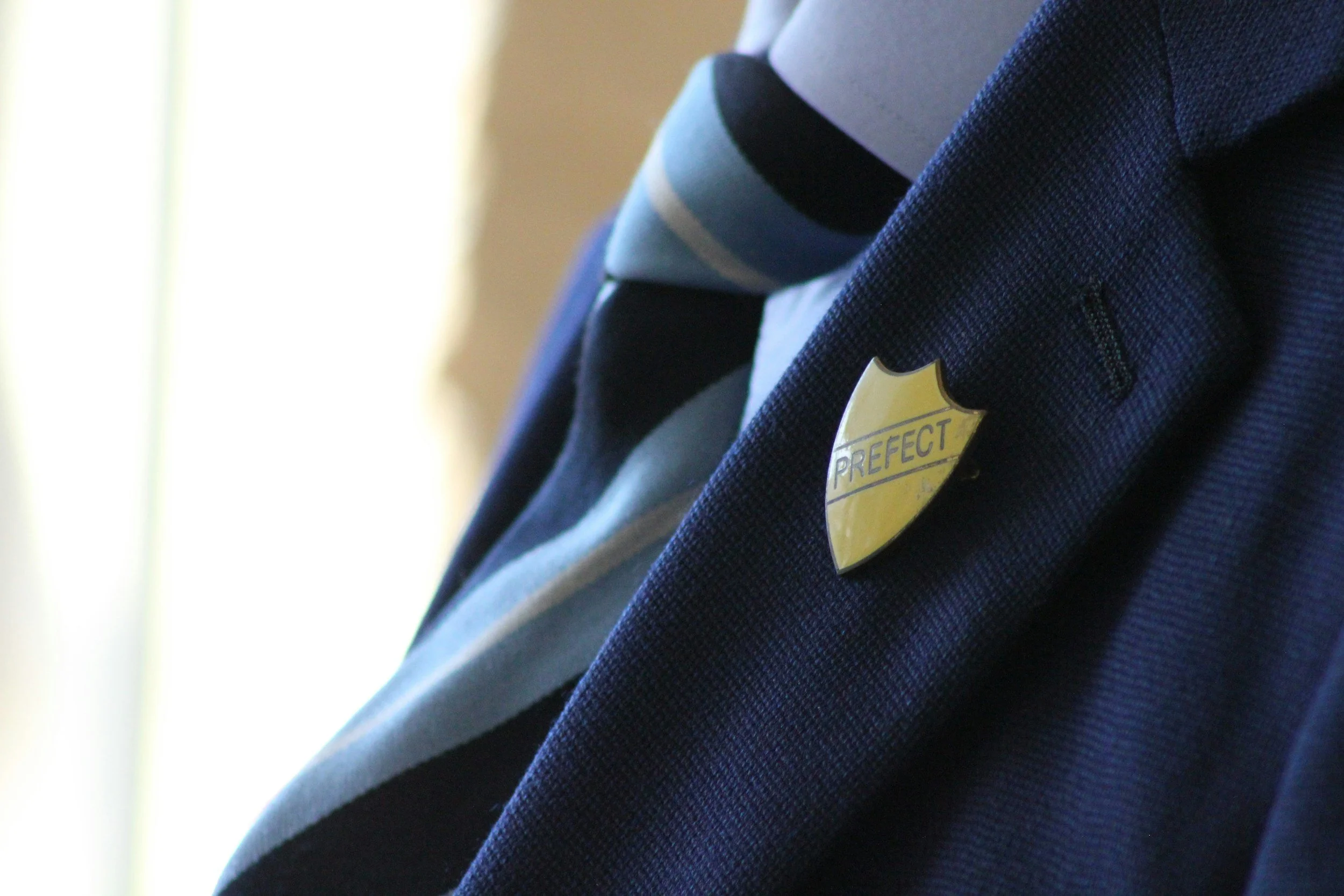
Head boy/girl or prefect: demonstrates leadership skills, communication skills, responsibility
Captain of a club or sports team: demonstrates leadership skills, ability to encourage others, prowess in a particular subject/sport, ability to focus on a particular subject/sport
Tutor or mentor to younger students: demonstrates ability to encourage others, willingness to give up your time to help others
Completed gold DofE: demonstrates resilience, kindness, willingness to learn
Completed work experience/shadowing: demonstrates a willingness to learn, knowledge of the ‘real world’
Employee: demonstrates knowledge of the ‘real world’, self-sufficiency, knowledge of a particular role
Volunteer: demonstrates empathy, time-management skills (e.g. if you fit volunteer hours around school/work)
Completed qualifications gained outside of school/formal education: demonstrates self-motivation, independence, willingness to learn
Completed summer courses: demonstrates willingness to learn, willingness to dedicate additional time to education
Local/regional/national competition winner: demonstrates dedication to a particular skill set, determination
Rescued kittens from a burning building (or similar): demonstrates bravery, moral fortitude, determination, empathy
…And the Not So Obvious
Okay, so maybe you’ve done one or two of the things above, but not enough to write your whole personal statement about. These things look great on personal statements, which means that a lot of people will have mentioned them anyway.
Consider your hobbies, things you’ve overcome, and extra-curricular activities. Always remember to consider how they can be linked to the subject or course you want to study.
Are you a big reader? There will be plenty of books to read as part of your university education. The ability to absorb and appreciate what a text is conveying is a useful skill. Perhaps you have one or two stand-out books that have really impacted you and inspired you to pursue this subject. Did they demonstrate how this subject will help you achieve a certain goal? Will it enable you to live your life by a certain value or quality?
What about an active participant of sports? Both team leading and team playing roles can be assets. If you practise a solo sport, write about your determination, resilience, and perseverance.
Having caring roles/responsibilities over others, whether human or not, can show responsibility, empathy, and compassion. Learning unexpected skills or information is common in caring roles. Do you have a particular story or piece of knowledge that you gained as a result of looking after someone?
Are you a content creator? Articles, blogs, podcasts, artistic work and videos created to a deadline show: time management skills; communication skills; the ability to independently research; and knowledge of a particular media format and the tools required to use it.
Musical achievements are great to mention when they are relevant to your chosen course. Passing a grade 8 exam shows dedication and commitment to a subject. If you’re not quite there: you’re at grade x and working towards grade 8. If you have experience playing in public or at particular venues and you learnt relevant skills, make sure to mention them too.
What have you done to help the community or the planet? Have you ever been an environmental advocate – organising or participating in litter picking, writing to MPs, planting more trees, reducing plastic use, encouraging recycling? This shows determination and can be mentioned as something you are particularly interested in if it relates to your subject (biology, as an obvious example). Advocacy for equality is always relevant in all fields.
Have you overcome any major challenges such as an injury, discrimination, or illness? Have they inspired you to form a particular ethos and encouraged you to work for something that this course or subject will help you achieve?
Have you travelled anywhere relating to your course? Examples include: a visit to CERN for physics enthusiasts; shadowing hospital workers for those wishing to work in the medical profession; examining the Parthenon or Theatre Dionysia for the Classics. It can be closer to home too – plenty of museums and historical sites relate to a wide range of subjects in the UK.
Did a particular television programme inspire you? Maybe don’t mention that you binged The Big Bang Theory for 36 solid hours (true story) but if a programme pointed you towards a subject, or if you’re obsessed with First World War documentaries, then you can write how you were encouraged to pursue the subject.
What do you want to achieve in the future? Do you have a particular job in mind? Do you want to make a difference to your chosen field or to the way this field works. Will this course equip you with the knowledge you need to become the person you want to be and to live by your principles?
Remember, these are examples, not your personal experiences. Use these ideas to guide you but remain focused on what they mean to you. What did you gain from them? What did you learn? How does this make you an ideal candidate? How does it link to your course?
Consider Your Subject

If you’re still struggling to think of ideas or examples, work backwards. Consider what qualities the admissions team will be looking for in applicants to your chosen course.
Broad qualities include analytical thinking, good communication skills, command of the written word, willingness to learn, and resilience. More specific qualities might include curiosity for scientific subjects, empathy for caring and medical careers, or artistic prowess for art, architecture, or medical students.
Write down all the qualities that you think are relevant to your chosen course and think about which you have and how you gained them.
A Note on AI
AI uses information gathered from a huge number of sources to create a document that attempts to sound human and is relevant to the topic in question. I think I may have mentioned that this is your personal statement. You do not want to sound generic; you want to sound like you.
You can test this yourself by asking an AI tool to write you a personal statement for university for your chosen subject. Read it and notice how it tells the reader absolutely nothing at all. It’s stuffed with academic terms and technical jargon that aren’t helpful. AI produces ideal examples of badly written personal statements because they cannot be personal to you.
While using AI to help draft your statement is not banned, using any of its actual content is not going to provide the admissions team with what they’re looking for and may violate the contract you sign when submitting your statement which confirms it’s your own work.
In my opinion: AVOID.
Organising Your Personal Statement
The Questions
The personal statement format for 2026 has changed in the UK. You now have to answer three questions. This is designed to help you focus your response and ensure that you are including the information that the admissions staff will be interested in reading.
Why do you want to study this course or subject?
This is the spot for motivations, inspirations, and aspirations. This question asks:
What experiences have you had that make you interested in the subject?
What do you know about the subject already? What research or super-curriculars have you engaged in?
What can this subject do for you? What will you gain from this course or subject that you hope to use in the future?
Your response to this question should show your enthusiasm and knowledge of the subject without veering off into a book review or biography of someone who inspired you. This is an opportunity for the admissions staff to determine whether you have the necessary interest and drive to be an exceptional student in this field.
How have your qualifications and studies helped you to prepare for this course or subject?
You should include all things education-related other than your grades here. This question wants to know how you have used your academic experience up to this point. Universities want to know three things from this question:
What have you learnt and particularly enjoyed during your education?
What have you achieved during your education that relates to the course or subject?
What transferrable skills have you gained throughout your education?
What else have you done to prepare outside of education, and why are these experiences useful?
This question asks two things:
What experiences do you have? Write about activities you have participated in, roles that you have held, and things that you have gone through or experienced.
How do these experiences and achievements link to your course? Write about the skills you have learnt and why you think they will be useful.
Don’t Fret About What Goes Where
Your personal statement will be read as a whole; the questions are to help you focus on what the admissions team want to learn about you. The important thing is ensuring that you answer the question and that you don’t repeat yourself. If you think something you want to write answers more than one question, then it doesn’t matter too much where you put it. If you think you have more to say in one category than another, it’s fine to do so. The minimum requirement for one category is 350 characters, including spaces. For reference, that’s fewer than the number of characters in this paragraph.
How to Write the Essay
Remember that it is better to discuss how a quality or achievement is relevant to the course in detail, rather than list lots of things but not expand on why they show you’re the right fit for this course. This is not a conventional essay with an introduction and a conclusion so don’t waste words on these. Each point you make should do the following:
Introduce the skill or interest that you have.
Prove that you have this skill or interest by giving an example of an experience or achievement.
Discuss why you thought this was important to include. Provide context and explain what you learnt from it.
Link one point to the next at the end of every point of discussion.
Separate the points you want to discuss into the categories in a way that helps your essay flow . What does this mean? Well, it means that your reader won’t be jarred by abrupt jumps between the things you wish to share. You can group together qualities or achievements which relate to the course in similar ways.
Still Not Reached the Minimum Word Count?
Adding pointless words and sentences to increase the word count will not benefit you. If you can’t think of many examples, you should focus on explaining the relevance of the ones you do have.
Editing
Now it’s time to edit your first draft. You should ensure your personal statement is exactly what the admissions board is looking for and that there are no mistakes in spelling, punctuation, or grammar.
Cutting

Hopefully, you found lots of wonderful things to say about yourself and your subject. Regardless of whether you have reached or exceeded the maximum word count, the cutting stage is essential. If you’ve exceeded the word count, then you’ve got to cut it down without losing the important information. If you are under the word count the cutting stage is still important because it ensures that all the information you’ve provided is what the admissions team is looking for.
First of all, read each sentence.
Is it about you or your experiences?
Is it about your subject or a transferrable skill that is beneficial for your subject?
If the answer to either of these questions is no, then it needs changing. If the answer to both questions is no, then it needs to go.
Now it’s time to cut all those extra words and phrases which are getting in the way.
Avoid ‘hedge words’. These are words and phrases that lessen the effect of what you’re saying, for example: ‘might’, ‘maybe’, ‘could’, ‘possibly’, ‘can [do]’, ‘sometimes’, ‘tend to’. There’s a place for modesty: that place is not here. Fortunately, they do not usually affect the grammar of a sentence and can be deleted without any further changes.
Avoid grammar expletives. These are filler words which have no place taking up space in your personal statement. The most common examples are ‘there is/are’ and ‘it is/are’. Some minor reworking of a sentence may be required when removing these phrases but make sure you don’t add any extra words when making the sentence make sense.
Don’t use a longer word when a shorter one will do.
Kill clichés. Common phrases that the admissions staff will be sick of reading include: ‘from a young age’, ‘as an avid/voracious reader’, and anything involving the word ‘passion’. If you have read a phrase in a lot of examples or it repeatedly occurred in AI responses, see if you can reword it or write about your example in a more meaningful way. (Note: this refers only to phrases, not examples of things you’ve experienced/learnt.)
How to Revise Your Personal Statement
Got rid of all the fluff? Good. Now it’s time to revise your text. You can, and probably should, rejig what you’ve worked on. Don’t panic if you think you need to start again from scratch.
Having a break from working on your personal statement can help you to evaluate it better when you come back to it. Have you remembered another skill or experience which you think you should add? Have you changed your mind about the significance of something you included?
At this point you can look at exemplar personal statements written by successful applicants. Use this time to look at the way they linked their experiences with relevant skills and use this to help you evaluate the structure of your essay. Look at the things these students prioritised and use this to help you ensure that you have prioritised the most important things for you. Don’t reword what they’ve written. Don’t copy the order in which they’ve written things. Someone else’s successful personal statement is an ideal guide to their personal statement. While it is okay to review others’ work to ensure you’re on the right lines, never forget that this is personal to you.
Make sure that you haven’t added anything that needs avoiding. After each revision, go through the cutting and proofreading stages again.
Final Proofread

Make sure everything is spelled correctly.
Don’t rely on grammar checkers; read each sentence individually to check it for sense and grammatical correctness.
Check your punctuation. My top punctuation tip: use a semi-colon only if you know how to use a semi-colon. It is the punctuation mark most consistently used incorrectly.
Check for run-on sentences. This is when two or more independent clauses are joined incorrectly. This happens most often when your ideas run away with you and you keep adding to the same sentence. Don’t stick a comma in a sentence merely to continue it. Use a full stop. This also helps you to evaluate the order and cohesion of your essay.
By now, you’re very familiar with your personal statement. This makes it easy to miss things. Ask trusted friend, family member, or professional to proofread it for spelling, punctuation, and grammar.
Have someone close to read your personal statement to see if it sounds like you. The more it sounds like you, the more ‘personal’ it will be.
Once these checks have been made, read it through one more time to ensure you are happy with it before submitting it.
The Cat and the Comma Editing
Proofreading your own work has an array of challenges. Once you’re familiar with a text it can be easy to gloss over errors. The Cat and the Comma Editing is a professional copy-editing and proofreading service willing to help all university-hopefuls edit their personal statements. If you’d like to find out more, please contact me via the contacts page or email at thecatandthecomma@gmail.com.
Top 10 Tips for Writing Your Personal Statement
Start early.
Write down everything you can think of in the planning stage – refining comes later.
Be bold, not modest.
Be honest and open.
Ensure every sentence relates to you and your subject
Avoid cliches.
Avoid AI and ‘borrowing’ ideas from other personal statements.
Know the rules: it must be your own work, do not share your personal statement online or you’ll get pulled up for plagiarism.
Have a trusted relative, friend, or professional (hello) proofread your statement.
Believe that you would be an excellent student and this will shine through in your personal statement. If you can’t persuade yourself, how will you persuade anyone else